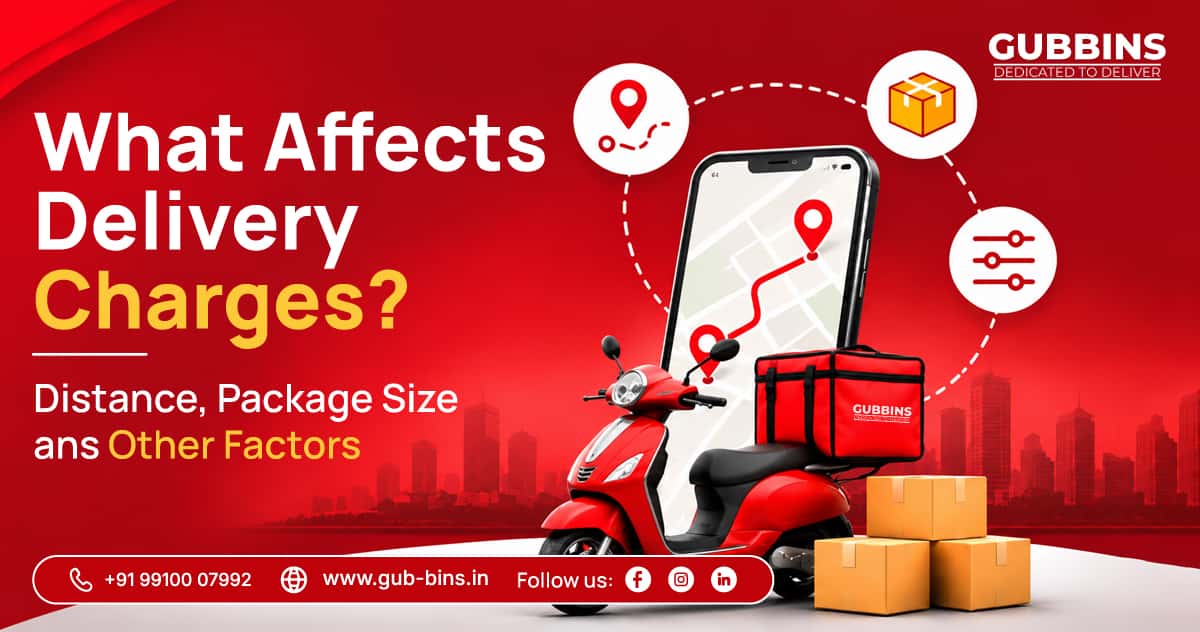
What Affects Delivery Charges? Distance, Package Size and Other Factors
Gubbins | 2026-11-20Your delivery charge isn’t a price. It’s a calculation, and most senders never see the math behind it.
Distance is only one input. Package size, weight, speed, and extra fees all change the final number. Understanding delivery charges and pricing factors is the difference between predicting a quote and being surprised by one.
Below, we break down what goes into the calculation and how to keep each part working in your favour, whether you ship daily or send a parcel once a year.
Weight vs. Size: How Volumetric Weight Inflates Your Bill
Couriers don’t only charge for how heavy your parcel is. They charge for the space it takes up in the vehicle.
That gives every parcel two weights:
- Actual weight: what the parcel weighs on a scale.
- Volumetric weight: a calculated weight based on its size, using length × width × height (in cm) ÷ a divisor.
The provider bills whichever is higher. That’s your chargeable weight.
For most domestic couriers in India, the divisor is 5000. So a box measuring 40 × 30 × 20 cm has a volumetric weight of 24,000 ÷ 5,000 = 4.8 kg, however little is inside it.
A worked example (illustrative)
|
Item |
Actual weight |
Box size |
Volumetric weight |
Billed weight |
|
Scarf in an oversized box |
0.3 kg |
40 × 30 × 20 cm |
4.8 kg |
4.8 kg |
|
Set of books in a snug box |
2 kg |
25 × 15 × 10 cm |
0.75 kg |
2 kg |
The scarf weighs a fraction of the books, yet it’s billed at more than double the weight. The extra air in the box is what you pay for.
What to do about it
- Measure the box after packing, including padding.
- Use the smallest box that protects the item.
- Calculate volumetric weight before you book, then compare it with the actual weight.
Check the divisor first. It isn’t universal. Some providers use 4000 for certain services, and contracts can set their own. Confirm the figure on your provider’s rate card before you calculate.
Speed and Handling: Why Urgent, Fragile, and Bulky Cost More
Distance and size set the base price. Speed and handling decide what gets added on top.
Speed is a premium
A standard parcel shares a route with others. An urgent one doesn’t. Same-day and express services assign a rider quickly and often run a direct trip, so capacity is reserved for you. You’re paying for priority, not just kilometres. That’s also why a grocery delivery in 1 hour is priced differently from a next-day parcel.
What you send changes the price
Not every item travels the same way:
- Fragile items need careful carrying and sometimes extra packaging.
- Perishables, like cakes and flowers, need quick, steady trips.
- High-value items may need insurance or proof of delivery.
- Bulky items need more room, and sometimes more hands.
Vehicle often sets the base rate
In on-demand delivery, a bike, a three-wheeler, and a mini truck each have their own base price. A parcel that won’t fit on a bike moves up a tier, however short the trip.
Many on-demand delivery services work as a pickup and drop service. A rider collects from one address and delivers to another, and the price reflects distance, vehicle, and speed.
How to keep this in check
- Sellers and SMEs: Offer standard delivery by default, and charge a clear premium for urgent orders.
- Shoppers and occasional senders: Book earlier. Urgent is a convenience you pay for.
- Everyone: Tell the provider exactly what’s inside, so you get the right vehicle the first time.
Hidden Charges: What Else Shows Up on the Final Bill
The base rate is rarely the whole story. Several delivery cost factors only appear at checkout, or on the invoice afterwards, and they can push your parcel delivery cost well above the first quote.
Where and when you send
- Remote pin codes: Hard-to-reach areas can carry extra charges.
- Peak hours and festival days: Demand rises, and so can prices. Some providers use demand-based pricing.
- Weather and night deliveries: Difficult conditions and odd hours can add a premium.
Location and timing matter across Delhi NCR too. Compare the best delivery partner in Delhi for your route, or a delivery service in Noida if your parcel crosses the border. If you need same day delivery in Delhi NCR, book early. Last-minute slots are where premiums tend to stack up.
Add-ons that appear on the bill
- Fuel surcharge
- Cash-on-delivery (COD) fee
- Packaging charges
- Waiting time
- Insurance
- Return or RTO (return to origin) charges
- Redelivery attempts
- GST
Returns and failed attempts catch sellers out most. A parcel that can’t be delivered can cost you the trip out, the trip back, and a second attempt.
One habit that fixes most of this
Always ask for the all-in price, not just the base rate. Two questions do the job:
- “What is the total, including every fee and tax, if everything goes as planned?”
- “What extra will I pay if the delivery fails or is returned?”
A clear provider answers both easily. A vague answer is a warning sign.
How to Keep Delivery Charges Under Control
You can’t change the distance. You can change almost everything else. Once you know the main delivery cost factors, each one becomes a lever.
Sellers, SMEs, and marketplace sellers
- Right-size your packaging. A smaller box means a lower volumetric weight, and a lower bill on every order.
- Negotiate volume rates. Regular shipping gives you leverage. Ask for better rates, and ask how extras like returns and COD are priced.
- Set a clear shipping fee policy. Pick one: a free-shipping threshold, a flat rate, or pass-through pricing. Each protects your margin differently, so test which one your customers accept.
- Compare the final billed cost. The cheapest quote isn’t always the cheapest courier once returns and failed attempts are included.
Startups
Build a simple cost model before you set prices. For each order, add packaging, the average delivery fee, expected returns, and payment fees. Subtract that from your margin. If the number surprises you, better to find out now. Delivery isn’t your only early expense, either. As your team grows, HR software for startups can keep your people costs as visible as your shipping costs.
Consumers and occasional senders
- Measure and weigh accurately. Guessing is how surprise charges happen.
- Ask what’s included. Get the all-in price before you book.
- Book earlier. Peak and urgent premiums are mostly the price of last-minute planning.
If you’re comparing local delivery charges, look for a delivery service in Delhi that states its pricing clearly and answers questions before you book. Clarity at the quote stage usually means fewer surprises at the bill stage.
Quick Answers: Delivery Charges and Pricing Factors
What factors affect delivery charges?
Six factors set most delivery charges:
- Distance or delivery zone
- Actual and volumetric weight
- Package size
- Delivery speed
- Item type and handling
- Extra fees and taxes
What is volumetric weight in delivery?
Volumetric weight is a calculated weight based on a package’s size, not its actual weight. Couriers multiply length, width, and height in centimetres, then divide by a divisor, commonly 5000 in India. They bill whichever is higher: actual or volumetric weight.
Why do delivery charges vary by distance?
Longer distances need more fuel, time, and rider capacity, so prices rise. The model also matters: on-demand services usually price by kilometre band and vehicle, while traditional couriers price by zone, such as same city or metro to metro. The same distance can therefore cost differently.
Why is same-day delivery more expensive?
Same-day delivery costs more because it uses priority capacity. A rider is assigned quickly and often makes a direct trip instead of sharing a route. You pay for speed and reserved capacity, and last-minute or peak-hour bookings can add further premiums.
How can I reduce delivery charges?
Use the smallest box that protects your item, weigh and measure accurately, and book earlier to avoid urgent premiums. Sellers can also negotiate volume rates and compare the final billed cost, including returns. Always ask for the all-in price before you book.
How is the delivery charge calculated?
Providers start with a base rate set by distance or zone, then apply the higher of actual or volumetric weight. They add charges for speed, item type, and vehicle, then extras such as fuel surcharge, COD fees, and GST. The sum is your final charge.
Know the Calculation, Control the Cost
You can’t change the distance. You can change the box, the timing, and the questions you ask.
So before you book, weigh the package. Measure its length, width, and height. Then ask each provider for the all-in price, including every extra. Understanding delivery charges and pricing factors turns a surprise bill into a number you saw coming.
Ready to see yours? Get a delivery quote with Gubbins, our on demand delivery service for Delhi NCR.
Sending orders every week? Talk to us about regular volume, or save the delivery-cost checklist for your next booking.

Refer & Earn – Share The Gubbins Experience!
Invite your friends, family, and senior citizens in Delhi NCR to use Gubbins for fast, reliable, and caring deliveries. Even if you live outside the city or abroad, you can refer Gubbins to your parents, elders, and senior citizens. Earn points for every successful referral and redeem them for delivery discounts.
Submit & Earn
Recent Posts
Gubbins India • 2026-11-10
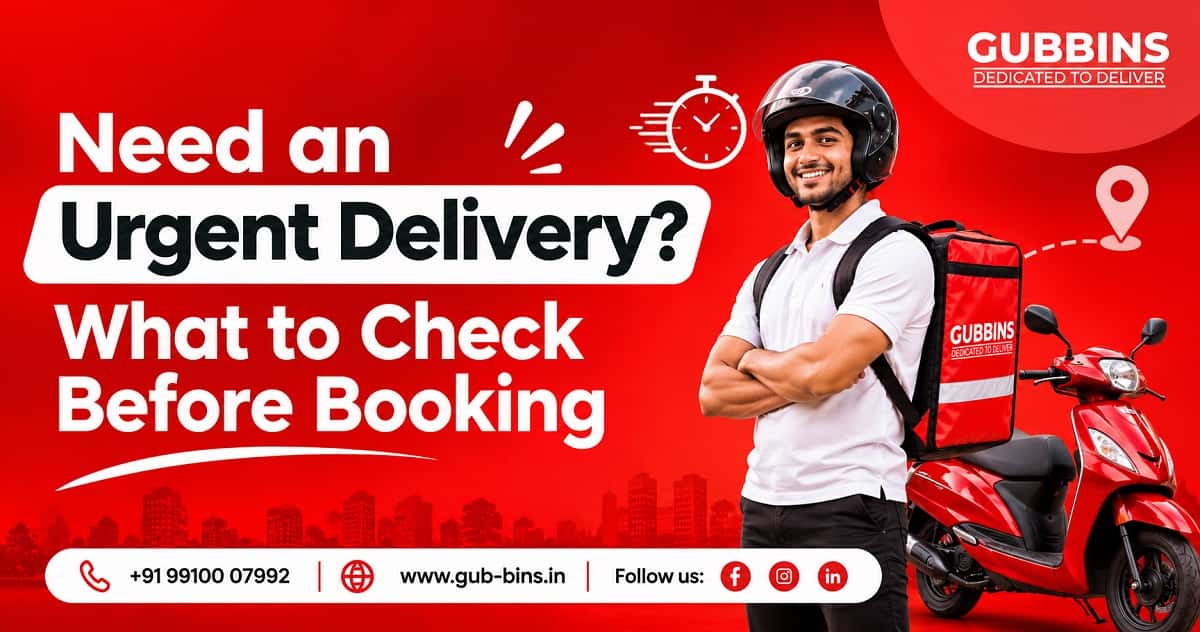
It’s 4 p.m. The cake is due at 6. The rider hasn’t shown up, and your customer is calling for the second time.
If you run a bakery, flower shop, or restaurant, you know this moment. Your reputation is sitting on the counter, waiting for someone else to move it. If you’re sending a gift or a forgotten document across town, it feels the same: one chance, no backup.
Here’s what most people miss. Urgent deliveries rarely fail because the courier was too slow. urgent delivery service fails because something went unchecked. The wrong vehicle. A half-written address. A recipient nobody could reach.
None of that takes long to catch.
Below is a two-minute check to run before you book. It covers most of what goes wrong, and it works whether you send fifty orders a week or one.
What “Urgent” Really Means (and Where It Breaks)
An urgent delivery isn’t one action. It’s five, and each can fail on its own:
- Order ready: packed, sealed, and waiting.
- Rider assigned: someone has accepted the job.
- Pickup: the rider reaches you and collects it.
- Transit: the trip itself.
- Handover: the right person receives it.
Most people watch only transit, but that’s rarely where things break. Delays hide in the joins between steps. The rider waits ten minutes because the order isn’t packed. Another circles a building because the pickup contact didn’t answer. Time disappears between steps, not during them.
That’s why “delivered in 30 minutes” needs a follow-up question. It can mean:
- 30 minutes until a rider is assigned
- 30 minutes from pickup to drop
- 30 minutes door to door, start to finish
These are very different promises. Ask which one you’re getting, and what happens if it’s missed.
The same five steps apply to paperwork. If you’re sending documents instead of a cake, our guide to the Best Way to Send Documents Urgently shows what to check at each one.
Check What You’re Sending and How It Will Be Carried
“Any rider can carry anything” is the most expensive myth in urgent delivery. Different items fail in different ways, so ask before you book.
|
Item |
Main risk |
What to ask |
|
Cakes |
Tilting, heat, vibration |
Will it travel flat? Is the vehicle suited to its size? |
|
Flowers |
Crushing, wilting |
Will it stay upright and out of direct sun? |
|
Hot food |
Spillage, cooling |
Is there insulated carrying? How long is the trip? |
|
Documents and medicines |
Loss, rough handling |
Is there proof of delivery? Will it be handled with care? |
Four questions cover most of it:
- What vehicle will carry it? Size and weight decide this.
- How will it be secured? Loose in a bag is not secured.
- Does it need temperature care? Heat ruins cream and chocolate. Cold wilts petals.
- Has the rider handled this before? Experience with similar items matters.
Here’s why it matters. A tiered cake on a bike takes every bump and sharp turn. It can lean, slide, or crack before it reaches the main road. The same cake, laid flat in a car, arrives intact. Same distance, same speed, different result.
Weight matters too. Gubbins riders deliver orders up to 17 kg, so a bulk restaurant order or a large gift hamper doesn’t need to be split. Always confirm the limit before you book, whichever service you use.
Sending a present instead? Our guide on how to Send Last-Minute Gifts covers what to check when time is tight.
Do Your 5-Minute Prep Before You Book
Here’s an uncomfortable truth. Many “slow” urgent deliveries are slow before the rider even moves.
The cake isn’t boxed yet. The address says “near the main market.” The recipient’s phone is off. The rider arrives and waits, and every minute of waiting comes out of your deadline.
The good news is that this is the part you control. Five minutes of prep can save thirty.
Run this checklist before you tap “book”:
- Order ready and packed. Sealed, labelled, and sitting at the pickup point. If it’s still being finished, book when it’s nearly done, not before.
- Full address with a landmark. Include the building name, floor, gate or tower number, and one landmark. “Flat 4B, Tower 2, opposite the petrol pump” beats a pin drop alone.
- Both phone numbers were confirmed. Check the sender’s and the recipient’s numbers, and make sure both people will pick up. A wrong digit costs more time than traffic.
- Pickup contact named. Tell the rider exactly who to ask for and where to go. In a busy shop or a large building, “ask for Rahul at the counter” saves minutes.
For gifts, add one more line: tell the recipient a delivery is coming, unless it’s a surprise. If it is, name a backup person who can accept it.
None of this makes the courier’s job easier for its own sake. It means that when the rider arrives, the only thing left to do is the delivery.
That’s the real shift. Instead of hoping the courier is fast, you remove the reasons for delay before they start.
Plan the Handover, Not Just the Address
A delivery isn’t finished when the rider arrives. It’s finished when the right person receives it in good condition.
That last step is where many good orders stall. The rider reaches the right address and still can’t complete the job.
Four handover problems come up again and again:
- Gated societies. The guard won’t let the rider in without a call to the resident. If the resident doesn’t answer, the order waits at the gate.
- Reception desks. Offices often accept parcels but won’t release a cake or flowers to “whoever is free.” Perishables can sit there for an hour.
- Surprise gifts. The person who would accept the order is the one you’re hiding it from. Calling ahead ruins the surprise, and not calling risks a refused door.
- No one home. A perfect order sitting at a locked door is still a failed delivery.
A simple plan prevents most of this. Settle three things before you book:
- Who accepts it. Name one person, and share their number. If it’s an office, give the person’s name and floor, not just the company.
- A backup contact. Choose someone else who can receive it: a family member, a neighbour, a colleague, or the front desk. Share their number too.
- What the rider does if no one answers. Decide this in advance. Should the rider wait ten minutes, call you, or leave it with the guard? For cakes, flowers, and hot food, leaving it unattended is rarely the right call.
For shop owners, add one line to your order form: “Alternate contact for delivery.” It takes a few seconds, and it saves the call you dread.
For surprise gifts, give the rider a cover line, such as “a delivery for [name] from work,” so the recipient isn’t alarmed and the surprise holds.
Plan the last 30 seconds as carefully as the first 30 minutes.
Ask What Happens If Something Goes Wrong
Most providers will tell you how fast they are. Few are asked what happens when they aren’t.
That’s the question worth asking. A provider’s answers show how they behave under pressure, and that tells you more about reliability than a price tag or a speed claim.
Ask these four things before you book:
- Live tracking. Can you see where the rider is, or do you have to wait for updates?
- A contact you can actually call. Is there a real person or number for this order, or only a chatbot?
- Delay and damage policy. What happens if the order is late or arrives damaged, and who decides?
- A backup rider. If the rider cancels or breaks down, is someone else assigned, and how fast?
Vague answers are an answer. “We’ll look into it” is not a policy.
Why this matters more for shops
For a business, the delivery fee is often the smallest number in the equation. Here’s a worked example. It’s illustrative, so swap in your own figures.
Say you can book a rider for ₹80 or a more reliable one for ₹140. The difference is ₹60. Now suppose the cheaper delivery damages a cake:
- Remaking it (ingredients and labour): ₹800
- Booking a second delivery: ₹140
- An apology credit for the customer: ₹300
That’s ₹1,240 in direct costs, more than 20 times the ₹60 you saved. It doesn’t include the customer who may never order again.
The cheapest fee only looks cheap if nothing goes wrong. Ask what happens when it does.
Urgent Delivery Quick Answers
What should I check before booking an urgent delivery?
Check five things before you book:
- What’s being carried, and how fragile it is
- Whether the vehicle suits its size and weight
- The recipient’s number, plus a backup contact
- Who accepts the order, and where
- A support contact you can actually call
How do I book an urgent delivery?
Choose a delivery service, enter the pickup and drop addresses, and add both phone numbers. Select the vehicle that suits your item, confirm the price, and book. Have the order packed and ready before the rider arrives, so pickup takes minutes, not half an hour.
How fast is an urgent delivery?
It depends on distance, traffic, and how ready the order is at pickup. Always ask what the quoted time covers: rider assignment, pickup to drop, or door to door. A 30-minute promise can mean three different things. Peak hours and festival days add time.
How can I send a cake or flowers safely by courier?
Choose a vehicle suited to the item’s size, keep cakes flat and flowers upright, and use sturdy, secure packaging. Tell the rider what’s inside and mention heat or fragility. For tiered cakes, a car is safer than a bike. Confirm the weight limit before booking.
What if my urgent delivery is late or damaged?
Contact the provider immediately through their support number, and share the order ID and, for damage, photos. Ask about their delay and damage policy and whether a replacement delivery is possible. Better still, ask about the policy before you book.
Conclusion
Urgent deliveries don’t fail because the world is unpredictable. They fail because small things go unchecked. What’s being carried and how. Who receives it and how they’ll be reached. Who to call if it goes wrong.
You can’t control traffic. You can control the minutes before you book.
Ready to book? Book an urgent delivery - our on demand delivery service is built for moments like this. Prefer to plan ahead? Save the checklist, or talk to us first.
Urgency isn’t about moving faster. It’s about leaving less to chance.

Gubbins India • 2026-11-04
It’s almost seven in the evening, and you’ve just remembered the gift. Your sister’s birthday was today, the box is still sitting on your table, and she’s expecting it before dinner. Or maybe it’s a file your client needs first thing tomorrow. Or a handful of orders you packed this afternoon, waiting by the door with nobody to take them.
So you open your phone and search for a delivery service. A long list of names comes up, and every single one says fast, safe, reliable. You think, okay, but which one?
Honestly, most of us tap the first result and hope for the best. Sometimes it goes fine. Sometimes you spend the whole next day asking where your parcel is. A few minutes of thinking before you book can save you from that, so here we'd go about how to choose a delivery service.
If you’re short on time: Work out what you’re sending and how soon it has to get there. Then look for someone who knows your area, takes care of their riders, makes booking easy, and keeps you in the loop. That counts for a lot more than who’s cheapest.
Start With The Parcel, Not The Provider
We know, it sounds too obvious. But we skip this step all the time. A sealed envelope isn’t the same as a wrapped gift. A bag of groceries isn’t the same as a box of products going to a customer. Some things are delicate, some can’t get wet, and some just can’t be late.
So before you compare anyone, ask yourself a few easy questions. Is it fragile? Is it important? Is this a one-time thing, or will you be sending parcels often? Once you know, you’ll ask better questions, and you’ll notice quickly which providers actually listen.
Be Honest About Your Deadline
Speed costs money, and plenty of us pay for it when we don’t need to. If the gift can reach her/him tomorrow, you don’t need a rush. If a colleague is waiting on a document this afternoon, you do.
So think about how urgent it really is. If it’s urgent, look for an on-demand delivery service that can send someone when you book. If you have some free time, take a moment to unwind and explore a few options. Either way, go with the provider who tells you straight what they can and can’t do. The one who says yes to everything is usually the one who lets you down.
Check out - If you want to know the Best way to send parcels Urgently in Delhi NCR.
Find Someone Who Knows Your Streets
If you’ve ever tried explaining an address in Delhi NCR over the phone, you know how it goes. “Go past the sweet shop, take the second lane, and it’s the green gate.” A map only helps so much.
That’s why a local delivery service often does better than a big name that treats your city like any other. People who work in your area every day know which roads jam up in the evening and how addresses really work. Check that they cover the places you send to, and that they can handle the pickup as well as the drop.
Ask Who’s Actually Carrying Your Parcel
Hardly anyone asks this, and I think it matters more than almost anything else. There’s a real person behind every delivery, and the way a company treats that person usually shows in how your parcel gets handled.
Some services depend on freelancers, so you might get a different face every time. Others have riders who are part of the company. When riders are on the payroll, they know the service they represent, they answer to someone, and they tend to care how things turn out. It’s a perfectly fair question to ask any parcel delivery service: who are your riders, and how do they work with you?
Booking Shouldn’t Feel Like Homework
If it takes several calls just to confirm a pickup, take that as a warning. The best delivery partner makes the first step easy. You should be able to book, say where the parcel’s going, and reach someone quickly if your plans change.
App or website, it doesn’t matter much. What matters is that you feel in charge, and you’re not left wondering whether anyone even saw your request.
Notice How They Talk to You
You’re handing over something that matters and hoping it arrives safely. That’s trust, so how a company communicates counts for nearly as much as the ride itself.
Pay attention before you even book. Do they reply clearly? Do they sound like they’re listening, or reading from a script? If it’s hard to get a straight answer as a new customer, imagine trying to reach them when something goes wrong halfway through a delivery.
The Cheapest Isn’t Always The Cheapest
A low price is hard to ignore, I get it. But a parcel that turns up late, damaged, or not at all costs you far more than the few rupees you saved. There’s the stress, the replacement, and the customer who stops trusting you.
So instead of asking what’s cheapest, ask which option lets you relax. Is the price explained clearly? Any surprises at the end? Honest pricing usually comes from an honest provider.
Ask People Who’ve Been There
Reviews and word of mouth tell you things a website never will. Read them for patterns, not for one angry comment. Do people mention on time pickups and careful handling? And when something went wrong, what did the company do about it? A team that fixes its mistakes well is often better than one that swears it never makes any.
Even better, ask someone you know. If a friend or colleague has sent something like yours, a quick message to them is worth more than a pile of search results.
Find Out What Happens When Things Go Wrong
Even the best services have an off day. A rider gets stuck in traffic, the person receiving the parcel isn’t home, or an address turns out to be harder to find than anyone expected. It happens. What matters is what comes next.
Before you book, find out how the provider handles problems. Is there a real person you can call or message? Will they tell you early, or only after you’ve started worrying? A good provider treats a delay as something to sort out with you, not something to hide. You don’t need a perfect record. You need a team that picks up the phone and owns the problem.
Get Your Parcel Ready Before The Rider Arrives
A little preparation goes a long way, and it only takes a few minutes. Pack the item snugly so it doesn’t shift around. If it’s fragile, say so when you book and mark the outside too. Write the drop address clearly, add a landmark if the lane is tricky, and keep your phone nearby so the rider can reach you. If someone else is receiving it, give them a heads up that it’s coming.
Most delivery trouble isn’t dramatic. It’s a missing landmark, or a phone left on silent. Small things, and easy to avoid.
It Depends On Who You Are
The right choice changes with your situation.
If you’re a busy professional, you probably want to book from your desk and get on with your day. Easy booking and dependable pickups come first.
If you run a small business, maybe a home bakery or a little online shop, you need someone you can count on week after week. Your customers are waiting, and you want to hear early if something changes.
And if you’re just sending a gift or some papers to someone you care about, you want it handled gently, and you want the whole thing to be simple. That’s really all.
Figure out which of these sounds most like you, and the choice gets a lot easier.
How to Choose the Right Delivery Service
If you're still wondering how to choose a delivery service, don't overthink it. Start with what you need, then find a provider who can make the whole process easier. A good delivery service should do more than simply pick up a order and drop it off. It should give you confidence that your package is in safe hands and will reach the right person on time.
Look for a few things before making your decision. Check whether the provider covers your pickup and delivery locations, offers the delivery speed you need, and has clear pricing. It's also worth finding out who handles your parcel, how easy it is to book a pickup, and whether you can reach someone if there's a delay.
If you're sending parcels regularly, choose a reliable delivery service that understands your routine rather than one that works for you only once in a while. For occasional deliveries, a simple booking process and flexible pickup options can make all the difference. And if most of your deliveries are within your city, a local delivery service with good knowledge of the area is often a practical choice.
For example, if you're based in Delhi NCR and need someone to handle urgent documents, personal packages, or business orders, Gubbins offers on-demand pickup and delivery with its own team of riders. It's one option worth considering when you want a straightforward delivery experience without too much back-and-forth.
At the end of the day, the right delivery provider is the one that fits your needs, respects your time, and gives you one less thing to worry about.
Where Gubbins Comes In
We started Gubbins for the moments at the top of this post: the file that can’t be late, the gift that has to get there in time, the order a customer is waiting for. We’re an on-demand pickup and delivery service across Delhi NCR, and our riders are on our payroll, so the person handling your parcel is part of our team.
You can also book a pickup and drop from anywhere in India for delivery to a location in Delhi, which cuts out a lot of the back-and-forth.
Ready When You Are
Choosing a reliable delivery service doesn’t have to be stressful. Know what you’re sending, be honest about timing, and go with someone local, clear, and consistent.
When you’re ready, take a look at Gubbins’ delivery options and book the one that suits you. Visit www.gub-bins.in or download the Gubbins app to get started.
Gubbins India • 2026-10-29
Picture this: it’s 4 pm, the birthday cake needs to be across Gurugram by 6, and you have no way to get it there. Or a signed document needs to reach Noida before the office shuts. The delivery partner you pick decides whether that evening is calm or stressful. This guide is for anyone comparing the top delivery partners in Delhi NCR, whether you’re sending a one-off parcel or running a shop. We’ve looked at Gubbins, Borzo, Porter, Shadowfax, Blue Dart, Delhivery, DTDC, and India Post, and kept it practical: where each one reaches, how fast it moves, how it charges, and what it’s actually good at.
Quick Comparison Table
|
Provider |
Type |
Best for |
Coverage |
Speed |
Pricing style |
|
Gubbins |
Hyperlocal, on-demand, own payroll riders |
Same-day pickup and drop, gifts, documents, local merchants |
Delhi NCR |
On-demand and scheduled |
Quoted in the app by service and distance |
|
Borzo |
Hyperlocal courier marketplace |
Small parcels and business deliveries within a city |
Delhi NCR and other metros |
Same day, often within hours |
Distance-based, with a cheaper end-of-day option |
|
Porter |
Intra-city goods transport |
Heavier loads, stock moves, shifting |
Delhi NCR and many other cities |
Instant bookings, same day |
Fare by vehicle, distance and locality, estimate shown upfront |
|
Shadowfax |
Hyperlocal and courier network |
Brands, SMEs and personal courier |
Delhi NCR and a pan-India network |
Instant to one or two days |
Varies by service tier |
|
Blue Dart |
Premium express carrier |
Urgent documents, high-value parcels |
Pan India |
Time definite, next business day |
Premium |
|
Delhivery |
National courier and logistics |
E-commerce sellers shipping across India |
Pan India |
One to several days |
Favors higher volumes |
|
DTDC |
Franchise courier network |
Documents and parcels, walk-in booking |
Pan India and international |
Next day and standard options |
Slabs by weight and distance |
|
India Post |
Government postal service |
Budget, non-urgent, and remote deliveries |
Pan-India, including rural areas |
Varies by product |
Slabs by weight and distance |
Which Delivery Partner Is Best?
Honestly, there’s no single winner. The best choice depends on what you’re sending, where it’s going, and how soon it needs to be there. Here’s how we’d match some common situations to a partner.
Best for same-day local delivery
For anything inside the city, go to a hyperlocal delivery partner in Delhi. Gubbins, Borzo, Porter, and Shadowfax’s Flash service all do same-day deliveries. If it fits on a bike, a service like Gubbins or Borzo is usually the simplest option. If you’re moving something big, Porter is the one to call.
Best for pan-India shipping
Once a parcel leaves the NCR, you want a national carrier. Delhivery, Blue Dart, DTDC and India Post all reach most of the country, but they’re quite different. Blue Dart is the premium, time-guaranteed option. Delhivery is built around online sellers. DTDC has counters everywhere so you can walk in and book. And India Post is hard to beat when you need to reach somewhere remote without spending much.
Best for e-commerce sellers
Most sellers end up using two partners: a national carrier like Delhivery or Shadowfax for orders going out of town, and a local partner for same-day orders inside the NCR. Gubbins and Borzo both have tools for businesses on the local side. Before you commit, ask about cash on delivery, returns, and how it plugs into your store.
Best for documents and parcels
Inside the city, a bike rider from Gubbins, Borzo, or Porter’s two-wheeler service will get a document across town the same day. Between cities, it depends on the paper: Blue Dart for the urgent ones, DTDC for everyday ones, and India Post for official or non-urgent papers.
Best for cakes, gifts and fragile items
With a cake or anything breakable, you want one rider carrying it straight from pickup to drop, not a parcel bouncing through sorting hubs. That points you to hyperlocal services like Gubbins, which uses tamper-proof packaging, or to Borzo and Porter’s two-wheeler service. Whoever you pick, it will leave clear handling notes for the rider.
Top Delivery Partners in Delhi NCR
We’ve grouped these by type, hyperlocal first and national carriers after. They’re not ranked.
Gubbins
Overview: Gubbins is an on-demand delivery platform made for Delhi NCR (Delhi, Gurugram, Faridabad, Ghaziabad, and Noida), with customers and merchants on the same platform. The riders are on the company’s payroll, trained and in uniform, and deliveries are contactless.
Strengths: You can book on demand or schedule ahead, pay in different ways, and track the order. Parcels go out in tamper-proof packaging. Merchants get their own side of the app for managing orders and seeing revenue numbers. People use it for groceries, gifts, documents, and even pet supplies.
Limitations: It’s currently focused on Delhi NCR, so it currently isn’t a pan-India shipping network. This service is designed specifically for shipping parcels, documents, groceries and gifts, but not heavy freight or furniture above 17kgs.
Best for: Local same-day deliveries; cake delivery; last minute gift delivery; document delivery; grocery delivery; and consistent rider experiences for local businesses.
Borzo
Overview: Borzo (previously known as WeFast) is a platform that connects people who need to have items delivered with riders or drivers who can make those deliveries. Users can order a delivery using the Borzo app or website, which will then connect them to a rider/driver in their area. Borzo currently operates in Delhi NCR and a couple of other metropolitan areas.
Strengths: Pickups are quick, and you see the price as soon as you enter the addresses. Business senders can use cash on delivery, and you can schedule a booking or pick a cheaper end-of-day slot.
Limitations: It’s local only, so it won’t help if the parcel is going to another city. Your experience will depend upon the specific courier that matches your order since this is a marketplace.
Best for: Small parcels, documents, and business deliveries within the same city.
Porter
Overview: Porter is an app for booking vehicles to move goods, anything from a two-wheeler to a mini truck. It also offers packers and movers and has tools for businesses.
Strengths: It has the widest range of vehicles here, so bulky or heavy loads aren’t a problem. You get an estimate in the app before you book, and bigger customers can plug in through APIs.
Limitations: It’s really about booking a vehicle, not sending a single parcel, so for something tiny it can feel like more than you need. Fares change with locality and vehicle type, and it isn’t a pan-India courier.
Best for: Moving large and heavy items such as stocks, appliances, furniture, etc., throughout the city.
Shadowfax
Overview: Shadowfax began as a hyper-local delivery provider within the National Capital Region (NCR). Today, Shadowfax provides services to e-commerce companies, quick-commerce providers, and small businesses. Its Flash service handles instant or same-day personal courier, and its express options take a bit longer.
Strengths: It covers a wide range of speeds, from instant to a day or two, across a big PIN code network, and it’s strong with business customers.
Limitations: Its focus is on business, and the individual sender will find it to be a less personal way to communicate than other apps developed with the user in mind. It may also require some comparison of the different levels of service available.
Best for: Brands and smaller businesses seeking a single provider for their local and national delivery needs.
Blue Dart
Overview: Blue Dart is a premium courier service provider. It is owned by DHL. It operates in postal codes across the National Capital Region, also known as NCR. These areas include Delhi, Gurgaon, Noida, Ghaziabad,d and Faridabad. The service is designed for reliable delivery. Customers can depend on arrivals. Blue Dart focuses on quality and speed. It serves both business and personal needs. The company maintains standards. It is trusted by many for shipments. Delivery times are consistent. This makes Blue Dart a preferred choice. The service is available in urban centers. It connects parts of the NCR. Customers benefit from dependable delivery.
Strengths: Guaranteed delivery times, a long history of successfully handling urgent documents, an extensive domestic network, and international delivery capabilities via DHL.
Limitations: It’s priced at the premium end. The time-definite services aren’t offered from every origin or to every destination, and delivery is usually next business day, not within hours.
Best for: Urgent documents, high-value shipments, and businesses that care about guaranteed timing.
Delhivery
Overview: Delhivery is one of India’s largest logistics companies, handling express parcels, freight, and supply chain work. It has also offered a service for individuals called Delhivery Direct.
Strengths: Its PIN code network is among the widest in the country. It also offers cash on delivery, good technology, and Sunday deliveries in many areas.
Limitations: Pricing tends to favor shippers with higher volumes, so very small senders can find it costly. And it’s not an instant, on-demand local service.
Best for: India-wide shipping for e-commerce sellers and D2C brands.
DTDC
Overview: DTDC operates as a courier service network that primarily uses franchises to handle both domestic and international deliveries of documents and packages at varying service levels.
Strengths: There are outlets in plenty of neighbourhoods, so you can walk in and book. The domestic network is broad, and you can choose anything from standard to premium express.
Limitations: Since it runs on franchises, your experience can vary from one outlet to the next. Its rapid commerce service, Raftaar, launched in Bengaluru first, so don’t assume you’ll find it in Delhi. Same-day delivery depends on the route.
Best for: Everyday documents, student parcels, and anyone who likes booking at a counter.
India Post
Overview: India Post runs the country’s biggest postal network, and Speed Post is its service for parcels and documents. In 2026, it also launched premium time-bound options in selected cities.
Strengths: Nobody matches its reach, remote and rural areas included. Prices are generally low, and you can add things like insurance and registration.
Limitations: Speed depends on the product and the route, and it isn’t an on-demand service. The Speed Post tariff was revised in August of 2026; therefore, make sure to check the existing tariffs prior to sending.
Best for: Low-cost, non-urgent shipping and delivery to remote areas.
How to Choose a Delivery Partner
Begin with a couple of basic questions. How far are we shipping, and when do we have to deliver it? What size, weight, and fragility level do we have? Will we need tracking, COD (cash on delivery), or pick-up service? Are we making a single shipment, or will we make them regularly? When you answer these questions, you will most likely find yourself with two or three possibilities. If you would like to see a more complete list of what to look for in a shipping partner, please refer to our guide on how to select a shipping company.
Why Choose Gubbins
Gubbins is built around how Delhi NCR actually works. It covers 726+ pin codes, with trained riders on its own payroll, on-demand and scheduled bookings, tamper-proof packaging, and live tracking. It’s made for the deliveries that can’t wait: a forgotten file, a gift, a cake, a shop’s order.
Whether you’re booking as a customer from the Gubbins or looking for on-demand delivery services for your shop, you’ll find city details on our Delhi NCR delivery service page and on our local pages for Gurugram, Faridabad, Ghaziabad and Noida.
Conclusion
Which carrier is right comes down to what you’re sending. Is it a small parcel that has to move fast across the city? Something heavy and bulky? A big batch going out across the country? Maybe you only want the option that still gets you there? Choose two or three options from the table, then obtain a live quote for your actual route. The cheapest option will become clear once you see the quote. That usually takes a few minutes and settles the matter.
For fast deliveries across Delhi NCR, book your pickup with Gubbins. Call +91 9910007992, visit www.gub-bins.in, or download the Gubbins app.
Frequently Asked Questions
Which one is the best delivery partner in Delhi NCR?
The right choice will depend upon what kind of job it is. If you want to get your parcel delivered within the city limits today, then you should consider using Gubbins, Borzo and/or Porter. On the other hand, if you need to send a parcel to another city, then you might want to look into Delhivery, Blue Dart, DTDC and/or India Post.
Which delivery partner is best for same-day delivery?
Gubbins, Borzo, Porter, and Shadowfax’s Flash service all do it within the city. Pick Porter for bigger loads, and a service like Gubbins or Borzo for documents, gifts, and small items.
Which delivery partner is the cheapest?
There isn’t one answer. India Post is usually the economical choice for non-urgent shipments. For local same-day deliveries, the price depends on distance, vehicle, and time of day, so it’s worth comparing quotes in a couple of apps.
Which delivery partner is best for documents?
Inside the city, a bike-based service like Gubbins or Borzo works well. Between cities, Blue Dart is good for urgent documents, and DTDC or India Post for everyday or official ones.
Which delivery partner is best for businesses?
Many businesses use two: a national carrier like Delhivery for orders going across India, and a local partner like Gubbins or Borzo for same-day orders in the NCR. Check cash on delivery, tracking, and integrations.
Can I schedule a delivery in advance?
With some partners, yes. Gubbins offers both on-demand and scheduled deliveries, and Borzo allows scheduled and end-of-day bookings.
Your trusted grocery delivery app and more, with fast and reliable deliveries at your fingertips.


Seamless onboarding, easy ride management, and earnings at your fingertips.